After-School Math Programs for NYC Kids in Early Elementary: RSM, AoPS, Mathnasium & More
How to match your K–3 child to the right math enrichment — without the pressure, the burnout, or the herd mentality
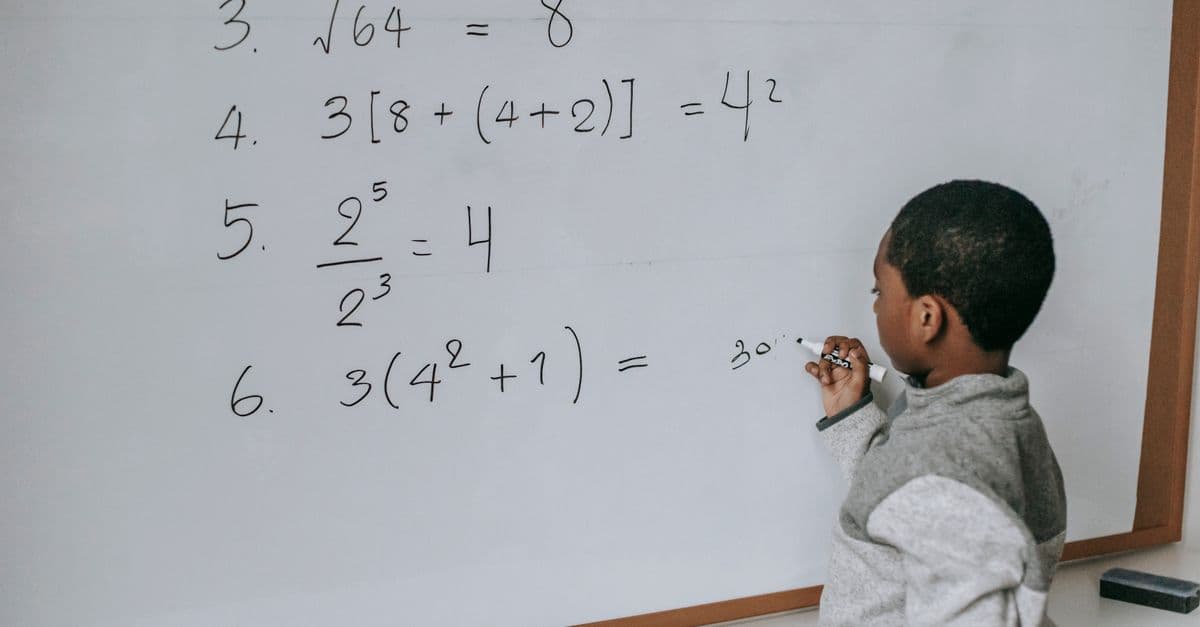
If you have a kid in kindergarten through third grade in New York City, you've probably already heard the acronyms flying around the school pickup line: RSM, AoPS, Mathnasium. Maybe another parent mentioned their second-grader just started Russian School of Mathematics and loves it. Maybe you're quietly wondering whether your own kid should be doing something too.
Here's the thing: there is no single right answer. The best after-school math program for your child depends on who your child actually is — their math level, their temperament, and whether they're the kind of kid who gets fired up by a challenge or quietly shuts down when pushed too hard. This guide is designed to help you sort through the most popular options honestly, so you can make the call that's right for your family — not just the most competitive one on the block.
First: Does Your Early Elementary Schooler Even Need a Math Program Right Now?
It's worth pausing here before you sign up for anything. Most kids in K–3 are still building the foundational number sense and mathematical intuition that will serve them for the rest of their education. A good classroom teacher and plenty of hands-on play with numbers — board games, cooking, Legos — can do a lot of that work naturally.
That said, there are real reasons to add structured enrichment. Your child might be racing ahead of grade-level content and genuinely bored. They might need some extra reinforcement to feel confident. Or they might just be a kid who loves puzzles and wants more. Any of those is a valid reason to explore what's out there.
What's not a great reason: fear that everyone else is doing it and your kid will fall behind if they don't. Programs like RSM are enrichment, not a prerequisite for a good education. Keep that in perspective.
The Big Options, Honestly Compared
Russian School of Mathematics (RSM) – Upper West Side and RSM – Brooklyn
RSM is the name you'll hear most often, and for good reason — it has a strong reputation for developing genuinely deep mathematical thinking, not just computation speed. Classes typically run about two hours per week and follow a rigorous, structured curriculum rooted in Eastern European math pedagogy. Kids learn to reason through problems, not just memorize procedures.
But RSM is not for every kid in early elementary. It's designed for children who are already comfortable with math and ready to go further — ideally kids who find math engaging rather than stressful. The two-hour class format and the expectation that kids do homework in between sessions is a real commitment, and for a kindergartner or first-grader who isn't intrinsically motivated by math, it can tip quickly into dread.
A common pattern worth knowing: some parents who start kids at RSM in kindergarten report wonderful experiences, while others find their child burned out by second or third grade. The difference often comes down to the individual child's temperament and genuine enthusiasm. Many families have found that waiting until around 4th or 5th grade — when kids have more stamina and clearer mathematical interest — leads to a much better fit.
Best for: Math-enthusiastic kids in late K–3 who are already ahead of grade level and can handle a homework commitment without losing their love of the subject.
Be cautious if: Your child already finds math stressful, resists homework, or shows signs of academic burnout.
Art of Problem Solving (AoPS) Academy – Upper West Side
AoPS has a devoted following among parents who want rigorous math enrichment with an emphasis on genuine problem-solving and mathematical joy. Their Beast Academy curriculum — the elementary-school-focused arm of the program — is particularly beloved for its comic book format and the way it makes challenging math feel like an adventure rather than a chore.
The in-person AoPS Academy classes on the Upper West Side are a meaningful step up in intensity, aimed at students who are ready to wrestle with problems that don't have obvious answers. It's intellectually demanding in the best sense of the word — less about drilling and more about thinking.
One thing to be aware of: AoPS in-person classes may have enrollment requirements or placement expectations. It's worth reaching out to confirm that your child's current level is a good fit before registering. The Beast Academy books and online platform are also available independently if you want to try the curriculum at home first without the class commitment.
Best for: Kids who love puzzles, tolerate ambiguity well, and are genuinely excited by math challenges. A great fit for families who want enrichment that prioritizes depth over speed.
Be cautious if: Your child needs a lot of encouragement to persist through difficulty — the problems are designed to be hard, and that's a feature, not a bug, but not every kid is ready for it in early elementary.
Mathnasium of Upper West Side
Mathnasium operates on a very different model than RSM or AoPS, and it fills a genuinely different need. Rather than pushing kids beyond grade level, Mathnasium focuses on meeting children where they are — diagnosing gaps, reinforcing foundational skills, and building the kind of number fluency and confidence that makes future math easier.
For kids who are at or near grade level and struggling a bit, or who have some shakiness in their foundational skills, Mathnasium is often a much better fit than the intensive enrichment programs. It's lower pressure, more individualized, and the goal is mastery rather than acceleration.
It's also worth noting that Mathnasium tends to be more flexible about scheduling and less of a weekly time commitment than RSM — which can be a real factor when you're managing a young child's after-school energy levels.
Best for: Kids who need to solidify grade-level skills, build math confidence, or get some targeted catch-up support. Also a good option for families who want supplemental math without the intensity of a competitive enrichment program.
Be cautious if: Your child is significantly ahead of grade level and genuinely craving a harder challenge — they may find the pace too slow.
Rocket Club Math – Upper West Side
Rocket Club takes a refreshingly different approach for the youngest set. It's a games-first, play-based math enrichment program aimed at pre-K and kindergarten-age children, built on the idea that early mathematical thinking is best developed through exploration, games, and fun — not worksheets or formal instruction.
For families with 4- and 5-year-olds who are curious about numbers but not ready for anything that looks like a class, Rocket Club is a genuinely lovely option. It nurtures mathematical instincts without putting pressure on kids to perform, which is exactly the right approach at that developmental stage.
If you're feeling the pull to "start early" with enrichment, Rocket Club is a much gentler on-ramp than jumping straight into RSM or AoPS — and it may do more to protect a young child's love of math in the long run.
Best for: Pre-K and kindergartners who are curious and energetic but too young for structured class formats. Also great for families who want enrichment that doesn't feel like more school.
Be cautious if: Your child is already in 2nd or 3rd grade and ready for something more structured — Rocket Club is really designed for the youngest learners.
The Burnout Question: How to Know If You're Pushing Too Early
This deserves its own section because it comes up constantly among NYC parents — and for good reason. The city's competitive academic culture can make it feel like every enrichment decision has permanent consequences, but that framing often leads families to push kids into intensive programs before they're developmentally ready.
Watch for these signs that a program may be too much, too soon:
- Your child complains about going consistently — not just the occasional grumpy day, but real resistance every week
- They've started saying they're "bad at math" or "hate math," especially if they didn't feel that way before
- Homework from the program is causing regular tears or meltdowns
- They seem exhausted by their overall after-school schedule
- You're the one who's excited about the program — and they're not
None of this means your child can't do enrichment math. It might just mean the timing or the specific program isn't right. There's nothing wrong with pausing, trying something lower-key like Rocket Club or Beast Academy books at home, and revisiting a more intensive program in a year or two when your child is ready.
Practical Tips Before You Sign Up
- Try a trial class or assessment first. Most programs offer some form of placement evaluation. Use it — not to see if your child is "good enough," but to see how they respond to the environment and teaching style.
- Ask about homework expectations upfront. Two hours of class per week is one thing; if there's also 30–45 minutes of homework on top of that, factor in your child's full schedule.
- Talk to your child honestly. Even a first-grader can tell you whether something sounds exciting or scary. Their gut reaction matters.
- Give it a real trial period. A few weeks isn't enough to know if a program is working. Aim for a full semester before drawing conclusions — but also trust yourself if something clearly isn't fitting.
- Check logistics. Locations, class times, and registration processes vary by program and semester. Confirm current details directly with each program, since schedules change.
Bottom Line
There is no universally "best" after-school math program for NYC kids in early elementary. RSM and AoPS are excellent for math-enthusiastic kids who are ready for a real challenge. Mathnasium is the right call for kids who need support and confidence-building. Rocket Club is a wonderful low-pressure entry point for the youngest learners. And for some kids, especially in K–2, the best math enrichment might be a great puzzle book, a math-themed board game night, or simply nothing extra at all — for now.
The goal at this age isn't to produce a competition math prodigy. It's to keep the door to math open and make sure your child still enjoys walking through it.
Places mentioned

Russian School of Mathematics (RSM) – Upper West Side
After-school math enrichment program for K–12 students rooted in Soviet-era pedagogy, emphasizing deep conceptual understanding, early algebra, and problem-solving over memorization.
Upper West Side

Russian School of Mathematics (RSM) – Brooklyn
Elite after-school math enrichment program for K–12 students in Sheepshead Bay, offering rigorous, curriculum-driven classes based on Soviet-era math school traditions.
Sheepshead Bay

Art of Problem Solving (AoPS) Academy – Upper West Side
AoPS Academy's first NYC campus offers rigorous after-school and weekend classes in math, science, language arts, and computer science for motivated students in grades 1–12.
Upper West Side
Mathnasium of Upper West Side
Personalized after-school math tutoring for kids in grades K–12 at this Upper West Side learning center, with individualized plans and free diagnostic assessments.
Upper West Side

Rocket Club Math – Upper West Side
Personalized math enrichment program for Pre-K through 7th grade on the Upper West Side, featuring small-group instruction, gamified learning, and weekly progress reports.
Upper West Side