NYC Music High Schools: LaGuardia, SMS & Frank Sinatra Explained
A parent's honest guide to specialized music high school admissions in NYC — how competitive each school really is, what auditions involve, and what to do if your kid is serious but not a prodigy
The Big Question Every Music Parent Faces
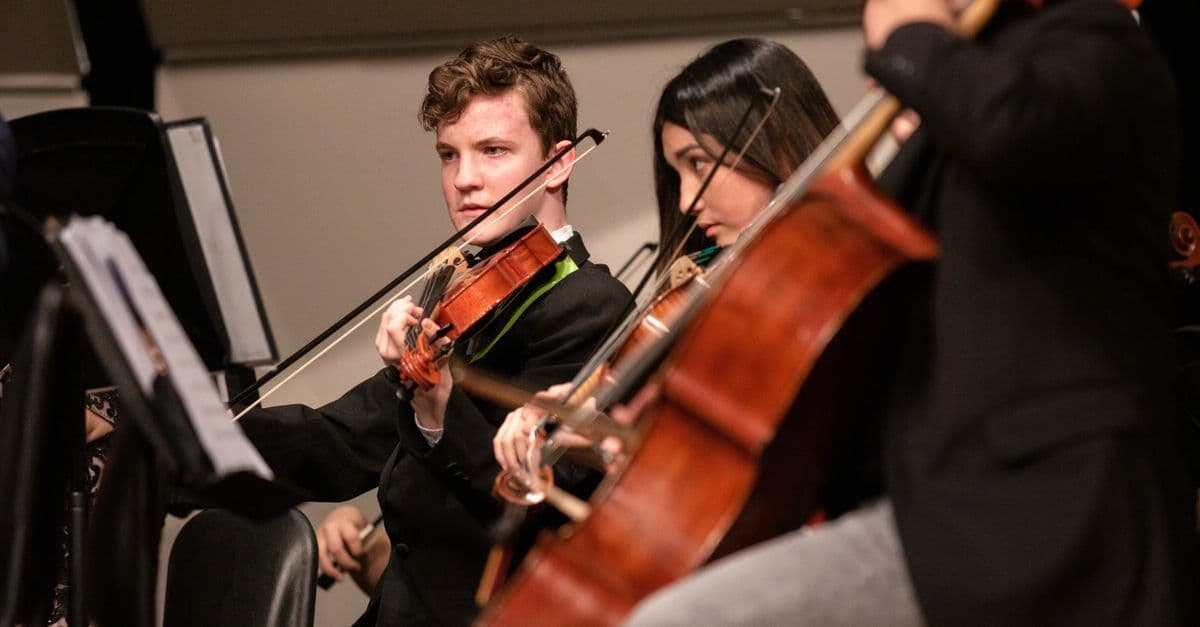
Your seventh grader loves music. Maybe they've been playing violin since third grade, or they've been singing in every school chorus and church choir they can find. You've heard about LaGuardia. Someone mentioned the Special Music School. A friend brought up Frank Sinatra. Now you're six months out from high school applications and trying to figure out what any of this actually means.
This guide is for you. We'll break down the three main specialized music high schools in NYC — how they differ, how competitive they really are, what auditions actually look like, and what other paths exist for musically serious kids who aren't on a conservatory track.
The Three Main Schools: Not All Created Equal
The first thing to understand is that LaGuardia, SMS, and Frank Sinatra are not interchangeable. They serve genuinely different students with different goals and different levels of prior training. Grouping them together as "the music schools" leads a lot of families to either over-prepare or under-prepare.
Special Music School (SMS) — The Most Selective, Most Intensive
SMS is in a category of its own. It's a K–12 school with a deeply classical music focus, and by the time students reach the high school division, they've typically been training at SMS for years. The school is tiny — we're talking very small cohorts — and the expectation is that students are performing well above grade level. This isn't a school you decide to apply to in seventh grade if your child hasn't been on a rigorous classical track. For families whose kids are in that world — serious private instruction, NYSSMA advanced levels, perhaps already performing in youth orchestras — it's worth researching. For everyone else, it's probably not the right fit, and that's okay.
Fiorello H. LaGuardia High School of Music & Art and Performing Arts — Competitive but Accessible to Hard Workers
LaGuardia is the most famous of the group, and its reputation sometimes makes it feel more mythological than it actually is. Yes, it's competitive. But it admits students across all five boroughs through a performance audition, and it's looking for demonstrated musicality and potential — not just prodigies with decades of private training. Students audition in a specific instrument or voice, and they're evaluated on technique, musicality, and stage presence. The school itself offers a full academic program alongside intensive arts training, and it produces graduates who go on to conservatories, liberal arts colleges, and everything in between. If your child has had consistent private instruction, practices regularly, and can hold their own in a prepared audition, LaGuardia is worth pursuing seriously.
Frank Sinatra School of the Arts — Strong Arts Culture, More Accessible
Located in Astoria, Queens, Frank Sinatra is a great option that doesn't always get the attention it deserves. It also admits students by audition and offers music alongside other arts disciplines. It tends to be somewhat less competitive than LaGuardia in terms of raw selectivity, which makes it a strong target school for students who are genuinely serious about music but might not have the most polished audition on paper. The school has a real arts culture — this isn't a zoned school that happens to have a chorus. Students there care about their craft. For families in Queens especially, it's often the practical choice with the most upside.
What Auditions Actually Involve
Each school runs its own audition process, and the specifics can change year to year, so always verify directly with the school during the current application cycle. That said, here's what to generally expect:
- Prepared repertoire: Students are typically asked to perform one or more pieces of their choosing. Selecting appropriate, well-executed repertoire matters more than choosing the flashiest piece.
- Sight-reading: Many music auditions include a sight-reading component. This is where consistent private instruction really shows — sight-reading is a skill that develops over time and is hard to fake.
- Scales and technical exercises: Expect to demonstrate technical fundamentals on your instrument or in your voice.
- An interview or short conversation: Some programs include a brief conversation with an audition panel. Your child doesn't need to perform a personality — they just need to be genuine about why they love music.
Start audition prep at least six months out. Work with a private teacher who has audition experience, ideally someone familiar with NYC school auditions specifically. Practice performing — not just practicing — in front of other people. Run mock auditions at home. Record your child and watch it back together.
Where Does NYSSMA Fit In?
NYSSMA (New York State School Music Association) offers adjudicated solo and ensemble performances on a graded difficulty scale, from Level 1 through Level 6. It's a legitimate, well-structured program that gives students performance experience and a benchmark for their level relative to other students statewide.
But here's the honest answer: NYSSMA appears to play a fairly limited direct role in NYC specialized high school admissions. Schools are running their own live auditions and making their own assessments. A Level 5 or Level 6 NYSSMA score is a meaningful credential that signals advanced preparation, and it can be good experience for building audition confidence — but it's not a ticket to LaGuardia, and a strong NYSSMA score won't substitute for a strong live audition.
If your child's school offers NYSSMA participation, it's worth doing for the experience and the structured feedback. Just don't treat it as the primary prep vehicle for high school auditions.
Alternative Schools Worth Knowing About
Here's what a lot of families miss: specialized arts high schools aren't the only path for musically serious kids. There are other schools in NYC with genuine music programs, and for some students — especially those who want rigorous academics alongside music, or who are still developing their performance chops — these alternatives can be a better fit.
Talent Unlimited High School
Talent Unlimited is a Manhattan school specifically focused on performing arts — music, dance, and theater. It's generally less selective than LaGuardia and offers a supportive environment for students who are serious about developing their craft but aren't necessarily ready for the most competitive audition rooms. For students who want an arts-integrated high school experience without the pressure of the most elite programs, it's worth a close look.
Institute for Collaborative Education
ICE in Manhattan isn't primarily an arts school, but it has a collaborative, student-centered approach that can work well for self-directed, creative kids. If your musically serious child is also academically curious and does well in less traditional school structures, it's worth considering alongside the specialized arts schools.
I.S. 318 Eugenio Maria De Hostos (Middle School)
If you're thinking ahead and your child is still in elementary or early middle school, I.S. 318 in Brooklyn is worth knowing about. A strong middle school music program can make a real difference in whether a student is ready to compete in high school auditions. Good middle school training builds the fundamentals that auditions test.
Zoned Schools with Strong Ensembles
Don't overlook the possibility that your local zoned high school has an excellent orchestra, band, or chorus. For students who want to pursue music seriously without attending a specialized arts school, a strong ensemble program at a rigorous academic school can offer the best of both worlds — especially if they're supplementing with private instruction and youth orchestra participation outside of school.
Practical Advice for Families Deciding Now
- Start honest conversations with your child's private teacher. A good teacher will tell you whether your child is realistically in range for SMS, LaGuardia, or Sinatra — and they'll usually know the difference between those three. Ask directly.
- Visit if you can. School culture matters. A student who thrives at Frank Sinatra might wilt at SMS, and vice versa.
- Apply broadly. Don't make SMS your only target if your child isn't already in that world. Apply to LaGuardia and Sinatra too. Apply to Talent Unlimited. Look at strong academic schools with good programs.
- Keep music joyful. The fastest way to derail a musically talented kid is to turn every lesson and rehearsal into audition prep anxiety. Make sure your child still has room to play music just because they love it.
- Remember that school isn't everything. Some of the most musically developed teenagers in NYC are at schools nobody's ever heard of — because they have great private teachers, play in youth orchestras, and are intrinsically motivated. The school matters, but it's not the whole story.
The Bottom Line
SMS is for students who are already on a serious classical track and performing well above grade level. LaGuardia is competitive but genuinely attainable for a hardworking, well-prepared student — not just prodigies. Frank Sinatra is a real arts school with a great culture and somewhat more room for developing musicians. And there are other good options that don't always make the shortlist.
Figure out where your child actually is, apply to schools that match both their current level and who they want to become, and don't let the prestige hierarchy convince you there's only one right answer.
Places mentioned
Fiorello H. LaGuardia High School of Music & Art and Performing Arts
NYC's only specialized high school where admission is by audition or portfolio — not the SHSAT. ~2,400 students train conservatory-level in Dance, Drama, Fine Arts, Instrumental Music, Vocal Music, or Technical Theater.
Lincoln Square
Special Music School (SMS)
NYC's only K–12 public school where music is a core subject — tuition-free, audition-based, and rooted in classical training on the Upper West Side.
Upper West Side

Frank Sinatra School of the Arts
A tuition-free NYC public arts high school in Astoria, Queens, founded by Tony Bennett. Students audition into one of six studios — dance, drama, instrumental music, vocal music, fine arts, or film and media.
Astoria
Talent Unlimited High School
A public performing arts high school on the Upper East Side offering audition-based programs in music, dance, drama, and musical theater for grades 9–12.
Upper East Side

Institute for Collaborative Education
A progressive public school for grades 6–12 in Gramercy Park, Manhattan, featuring project-based learning, an award-winning jazz band, and exemption from most Regents exams.
Gramercy Park
I.S. 318 Eugenio Maria De Hostos
A celebrated public magnet middle school in Williamsburg known for its nationally ranked chess team, vibrant music program, and nearly 50 after-school activities.
Williamsburg