How to Choose a Daycare in NYC
The questions that actually matter when touring NYC daycares — from staff turnover and inspection records to what your gut is telling you

If you're a first-time NYC parent starting your daycare search, there's a good chance the first question on your list is: do they have cameras? It makes sense. Leaving your kid somewhere for the first time is terrifying, and cameras feel like a concrete safety net.
But talk to parents who've been through it, and a pattern emerges: cameras rarely tell the whole story. The daycares that gave them the most confidence weren't necessarily the ones with live-streaming apps — they were the ones where staff knew every child's name at pickup, where turnover was low, and where the space felt calm rather than chaotic. Here's how to evaluate NYC daycares on criteria that actually predict quality.
Start with Staff-to-Child Ratios
New York State sets legal minimums for staff-to-child ratios, but not all ratios are created equal. For infants and toddlers especially, the difference between a 1:4 and a 1:6 ratio is enormous. A caregiver stretched across six one-year-olds can't give each child the responsive, attentive care that age group needs.
When you tour, ask directly: what is the ratio in the specific room your child would be in, and does that hold during lunch, nap, and transition times, or only on paper? Home-based daycares (Group Family Childcare homes, licensed by NYC's Department of Health) often have stricter ratios by nature of their smaller size — sometimes just six to eight kids total — which is one reason some parents prefer them for infants.
Also ask about float staff. Does the center bring in extra adults during messy or high-need parts of the day, or does one teacher regularly step out to handle administrative tasks while the ratio technically stays the same?
Ask About Employee Turnover — Directly
This question makes some directors uncomfortable, which is actually useful information. High turnover is one of the clearest warning signs in early childhood settings. Young children build attachment with consistent caregivers — when staff cycle out every few months, that continuity breaks down.
A good director will answer this question honestly and with some context: "We had two teachers leave last year, one retired and one moved out of state — most of our lead teachers have been here three or more years." A defensive or vague answer is a yellow flag.
During the tour, pay attention to whether the staff you meet seem energized and engaged, or exhausted and going through the motions. You can often sense the culture of a staff in the first ten minutes.
Look Up Their Inspection Records
This one is underused. The NYC Department of Health maintains a public database of childcare inspection records and violations — including any history of complaints, repeat violations, or corrective actions. Before you fall in love with a facility, take ten minutes to look them up.
Not every violation is a dealbreaker. A single documentation error is very different from a pattern of supervision lapses or repeated health and safety failures. What you're looking for is whether violations recur, and whether there's evidence the program addressed them. A director who can walk you through past violations calmly and explain what changed is actually demonstrating accountability — that's a good sign.
You can search the NYC childcare inspection database through the NYC DOHMH Child Care Lookup.
Evaluate How They Communicate Day-to-Day
Communication style is one of the biggest quality-of-life factors once your child is enrolled, and it's worth asking about in concrete terms during your tour.
Many NYC daycares now use apps like Brightwheel to send daily updates — photos, nap times, meals, diaper changes — throughout the day. For new parents especially, this kind of regular contact can significantly reduce anxiety. Ask whether updates are sent by individual teachers or logged by an admin, and how often you should realistically expect to hear from them.
Also ask: how will they reach you in an urgent situation? What's the protocol if your child has a fall, a fever, or a conflict with another child? Who is your point of contact for concerns — the teacher, the director, both?
The answer matters less than how they answer it. A program with clear, practiced responses to these questions has clearly thought about family communication as a priority.
The Camera Question — Reframed
Here's where we think the conversation gets more nuanced than it usually does. Cameras can provide real peace of mind in the first few weeks of enrollment. But they come with real tradeoffs worth thinking through.
Live parent feeds raise privacy questions for every child in the room, not just yours. There's also an argument — a reasonable one — that staff perform differently when they know they're being watched by parents in real time, and that's not always in the direction you'd hope.
A middle-ground approach that many quality programs use: internal cameras for incident review, accessible by directors and staff but not live-streamed to parents. This protects children's privacy, creates accountability, and keeps footage available if something needs to be reviewed. It's worth asking which system a program uses and why.
Ultimately, if you feel like you need live camera access to trust a program, that might be worth sitting with. The goal is finding a place you trust enough that you can drop off and go.
What to Notice on the Tour
Trust your instincts, but give them data to work with. Here's what to pay attention to during your visit:
- Do staff greet children by name? Do they crouch down to their level?
- Is there a posted daily schedule, and does it include outdoor time?
- What does drop-off look like? Do upset kids get immediate comfort, or are they redirected quickly so the adult can move on?
- How does the space smell? Clean without being overpowering with disinfectant is the goal.
- Are kids engaged in play, or is there a lot of screen time or aimless wandering?
- What's the noise level? Busy and active is normal; chaotic and stressful is different.
One often-overlooked moment: watch what happens when a child cries. That interaction tells you more than any marketing brochure.
Home-Based vs. Center-Based: What's Right for Your Family
Both models are licensed and regulated by the NYC Department of Health, but they feel very different day-to-day.
Home-based Group Family Childcare programs tend to have fewer children total, more mixed-age groupings (which some families love for the sibling-like dynamic), and often a more flexible, family-feel environment. They're also frequently more affordable. The tradeoff: backup coverage when the provider is sick can be inconsistent, and programs vary widely by provider.
Center-based programs tend to offer more structured curricula, dedicated classrooms by age group, and more predictable hours. Larger centers have HR infrastructure that home-based programs don't — meaning staff benefits, substitutes, and more formal oversight. They can also feel more institutional, which matters to some families and not at all to others.
There's no universal right answer. A lot comes down to your child's temperament, your commute, your budget, and honestly — which director made you feel most confident when you walked in the door.
NYC Daycares Worth Touring
If you're starting your search, here are a few programs in different neighborhoods worth putting on your list:
- Little Scholars Chelsea — a well-regarded center-based option in Chelsea known for its structured early learning environment.
- Lightbridge Academy – Prospect Heights — a Brooklyn option with strong family communication practices and a warm staff culture.
- Everbrook Academy of Manhattan (Murray Hill) — a center-based program in Murray Hill suited for Midtown-adjacent families.
The Bottom Line
Choosing a daycare in NYC is one of the highest-stakes decisions you'll make as a new parent, and it's okay for it to take time. The best daycares aren't always the ones with the nicest photos online or the most features on their website — they're the ones where the staff clearly loves being there, where the director answers your hard questions without getting defensive, and where your child comes home tired and happy.
Do the research. Check the inspections. Ask the uncomfortable questions. And then trust what you felt when you walked in the door.
Places mentioned
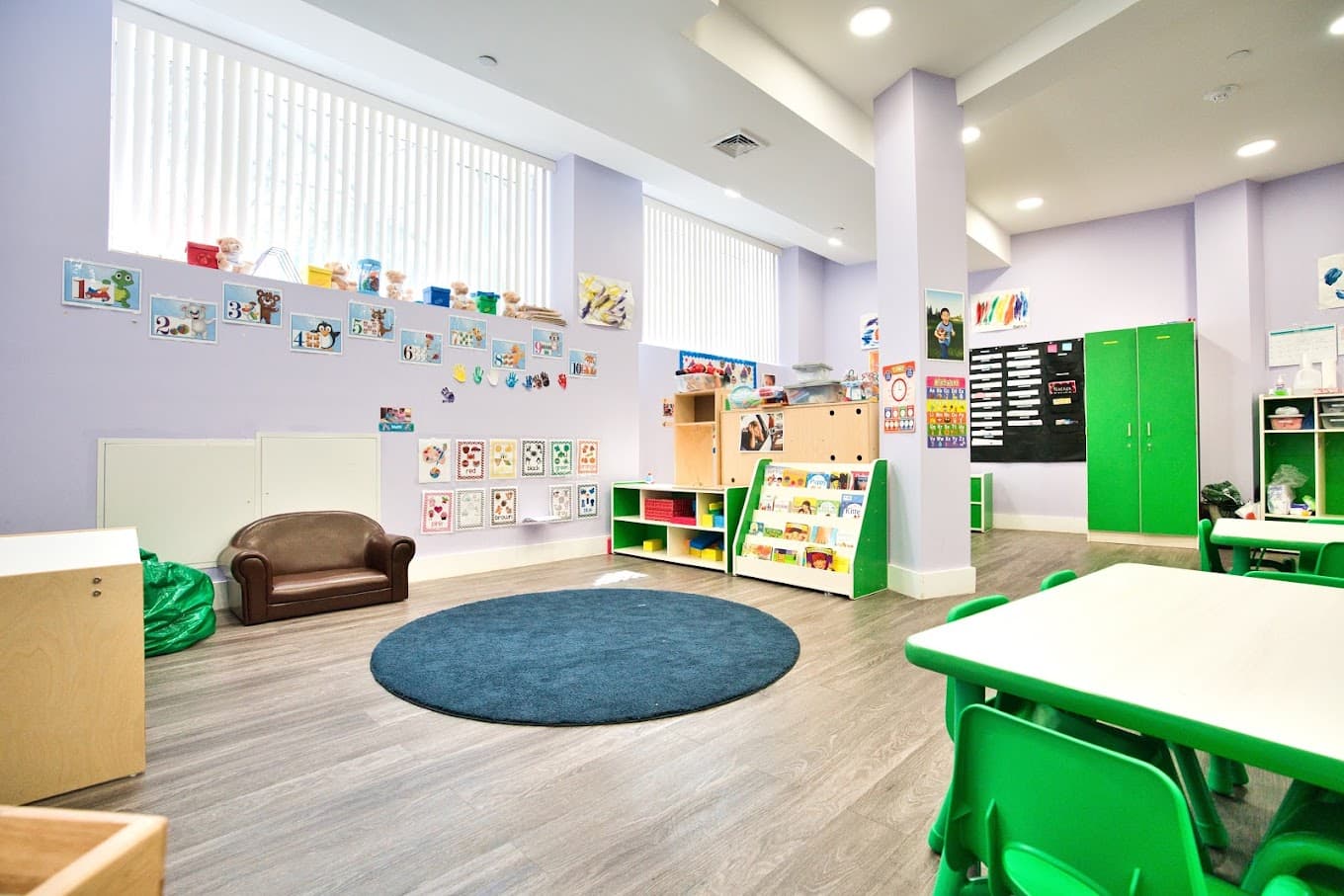
Little Scholars Chelsea
Licensed NYC daycare in Chelsea serving infants through pre-K, with play-based curriculum and small group sizes for children ages 3 months to 5 years.
Chelsea

Lightbridge Academy – Prospect Heights
NAEYC-recognized daycare and early childhood education center in Prospect Heights, Brooklyn, serving infants through pre-K with ParentView® camera monitoring and enrichment programs.
Prospect Heights

Everbrook Academy of Manhattan (Murray Hill)
Licensed daycare and early learning center in Murray Hill serving infants (6 weeks) through Pre-K, with full-time, part-time, and drop-in enrollment options.
Murray Hill