How Much Does Infant Daycare Cost on the Upper East Side?
Real numbers from named centers near Sutton Place and the UES — plus how daycare stacks up against a nanny before you commit to either.

What You're Actually Looking At Financially
If you're expecting and starting to map out childcare costs in Manhattan's Upper East Side, Sutton Place, or Carnegie Hill neighborhoods, here's the honest answer: full-time infant daycare at a reputable center runs roughly $3,600 to $4,600 per month. That's a significant line item — but it's worth understanding exactly what you're getting, and how it compares to the other main option, a full-time nanny.
Below we break down real pricing from named centers in the area, flag a few things parents of very young infants should weigh carefully, and give you a realistic sense of the waitlist situation — because on the UES, timing matters as much as budget.
What Infant Daycare Centers Near the UES Actually Charge
These are current full-time monthly rates for infant care (typically defined as children under 18 months to 2 years, depending on the center). Part-time slots are often available at proportionally lower rates, though availability varies.
Vivvi – Carnegie Hill
Vivvi's Carnegie Hill location comes in at the lower end of the UES range, with full-time infant care at approximately $3,650/month. For families in the 90s or near the Park Avenue corridor, this is one of the more accessible price points among accredited centers. Vivvi operates on a modern, flexible model and has built a strong following among working parents in the neighborhood.
Vivvi – Upper East Side
The UES flagship Vivvi location runs closer to $4,609/month for full-time infant care — a meaningful jump from Carnegie Hill, likely reflecting its location and facility. If you're based between the 60s and 80s, this is the more convenient option, but it's worth knowing the price difference before you sign up for a tour.
The Goddard School of Manhattan – Lenox Hill
Goddard is a nationally recognized franchise with a strong curriculum reputation, and the Lenox Hill location prices full-time infant care at approximately $4,472/month. Parents who prioritize a structured, play-based early learning environment often gravitate toward Goddard. Like most centers in this range, waitlists are competitive.
Bright Horizons at East 92nd
Bright Horizons is one of the most established names in employer-sponsored and independent childcare nationally. Their East 92nd Street location runs approximately $4,295/month for full-time infant care. Some families may also have access to employer backup care partnerships through Bright Horizons, which is worth checking with your HR department before you enroll.
How Daycare Compares to a Full-Time Nanny
This is the comparison most UES families are quietly running in their heads, and the math is closer than many people expect. A full-time nanny in this part of Manhattan typically costs $3,500 to $5,000 per month — and that's before factoring in the employer side of payroll taxes, which can add roughly 10–12% on top of gross wages.
When you account for the full cost of legal nanny employment, a nanny and a quality daycare center can land in surprisingly similar territory. Here's how parents tend to think through the tradeoff:
- Infant health exposure: Babies under 12 months haven't built much immune resilience yet. Center-based care means more germ exposure, more sick days, and more days you'll need backup coverage. A nanny at home significantly reduces this risk for very young infants.
- Caregiver ratios: Licensed infant rooms in New York State are required to maintain a 1:4 caregiver-to-infant ratio (and often better at premium centers). That said, a nanny provides a 1:1 ratio that no center can match.
- Reliability and backup: When your nanny is sick, you're scrambling. When a center teacher is out, the center handles coverage. For dual-income families with demanding jobs, that predictability matters.
- Socialization: For older infants and toddlers, the peer interaction at a good daycare center offers something a home nanny situation genuinely can't replicate.
- Tax advantages: Dependent care FSAs and the Child and Dependent Care Tax Credit apply to center-based care costs. Run the numbers with your accountant — the after-tax difference between nanny and center care may shift things.
The Waitlist Reality on the UES
This is not a scare tactic — it's just how childcare works in this part of Manhattan: waitlists at some of these centers exceed 18 months. That means families who are currently pregnant, or even thinking about a second child, should be reaching out to centers now.
Most centers will let you join a waitlist before your child is born, often for a small deposit. Don't wait until your third trimester to start making calls. The families who get spots at their first-choice centers almost always started the process earlier than felt necessary at the time.
A few practical notes on navigating waitlists:
- Apply to multiple centers simultaneously — you can always decline a spot if you get into your first choice.
- Ask each center about their typical waitlist movement timeline and when they send out offers. Some do rolling offers; others have a single annual enrollment window.
- Check whether your employer has a corporate partnership with any of these centers — Bright Horizons in particular has extensive employer relationships, and reserved slots can bypass the public waitlist entirely.
What to Ask on a Center Tour
Once you've confirmed pricing and landed a tour, go beyond the aesthetics. The infant room specifically deserves close attention. Ask about:
- Current caregiver-to-infant ratios in the infant room (and what happens when a teacher calls out)
- Staff tenure — high turnover in an infant room is a yellow flag
- How they handle feeding schedules and breast milk storage
- Their sick child policy and how quickly they expect pickups when a baby runs a fever
- Whether they have outdoor time built into the infant day, and what that looks like in winter
Bottom Line for Expecting UES Families
Infant daycare on the Upper East Side is a real cost — we're talking roughly $44,000–$55,000 annually at full-time rates — but it's in the same ballpark as a legally employed nanny once you account for taxes and benefits. The right choice depends on your child's age, your work schedule, your risk tolerance around illness, and honestly, which option you can actually get into.
Start the waitlist process now, compare the after-tax numbers carefully, and tour at least two or three centers before committing. The families who feel most settled about their infant care decision are almost always the ones who started planning earlier than felt necessary.
Places mentioned

Vivvi Carnegie Hill
Full-year infant, toddler, and preschool daycare in Carnegie Hill with an inquiry-based, play-driven curriculum and flexible enrollment options for working parents.
Carnegie Hill
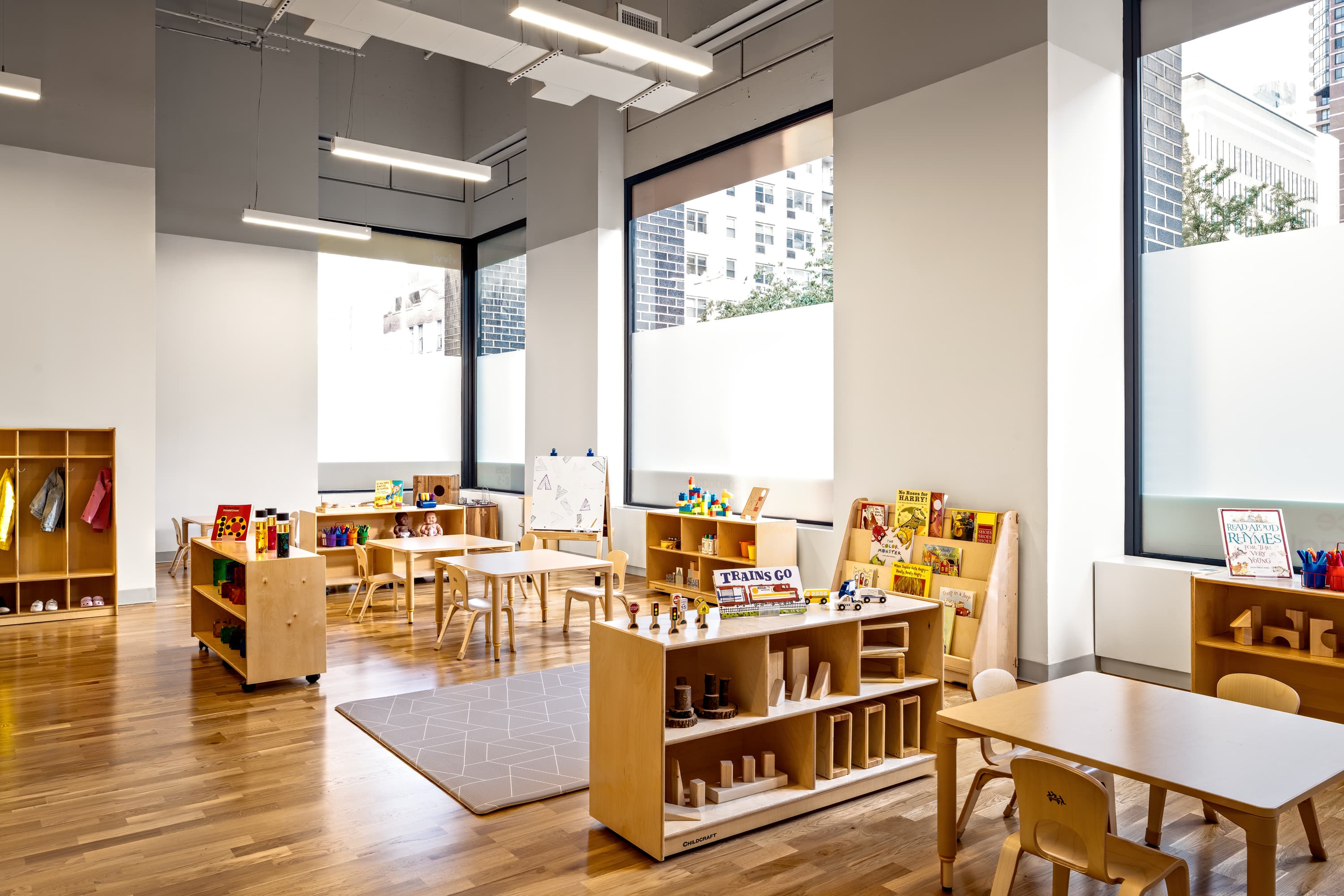
Vivvi Upper East Side
Inquiry-based early childhood education center on the Upper East Side serving infants through preschoolers, with extended hours and a NewYork-Presbyterian Hospital partnership.
Upper East Side

The Goddard School of Manhattan – Lenox Hill
Play-based infant, toddler, and pre-K childcare in a 15,000 sq. ft. two-story facility in Lenox Hill, open Monday–Friday 7am–6pm.
Lenox Hill

Bright Horizons at East 92nd
Full-year daycare and early education center in Yorkville serving children ages 1 month through 5 years, with infant, toddler, preschool, and kindergarten prep programs.
Yorkville